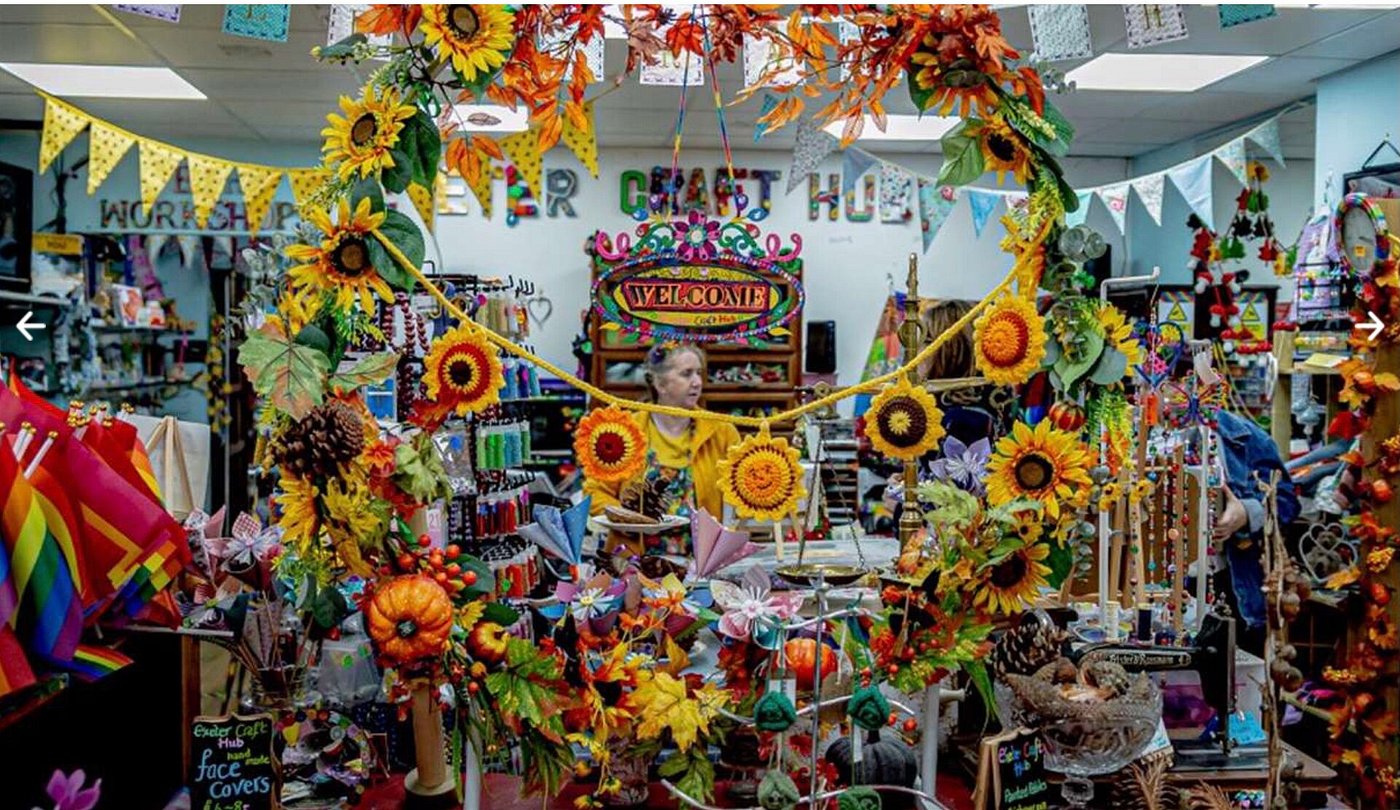
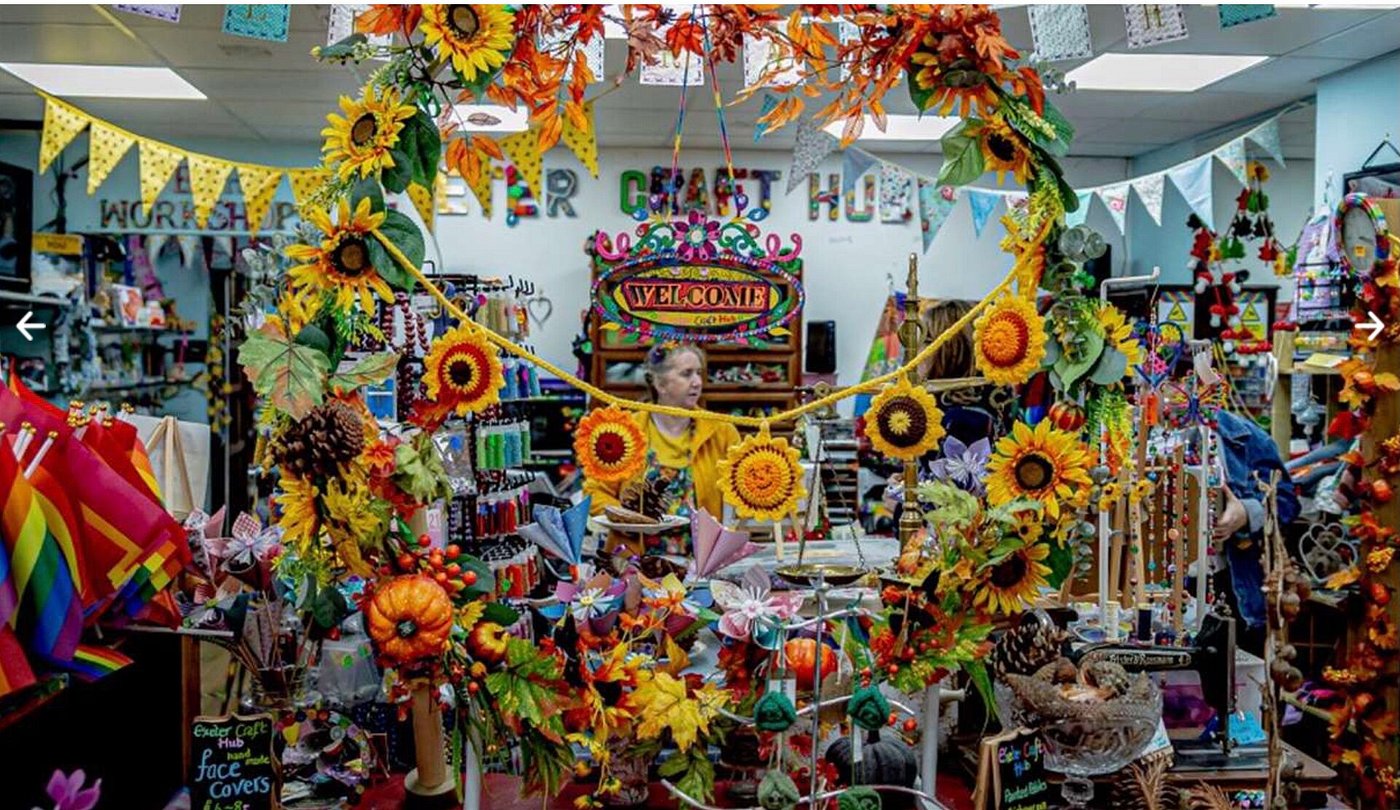
A half-finished project usually needs one missing material, not a new hobby’s worth of equipment. Compare hobby supply shops in Exeter by the work already on your table and the next task you want to complete. These five options include broad craft retail, specialist supplies and a reuse resource. Their numbering is not a tested price ranking, and a shop’s hobby label does not mean it carries every tool or material.
Bring the project instructions and a short list of what you already own. An idea found through Author Diaries is a useful spark, but it needs translating into actual materials before you shop. Otherwise a visit meant to solve one problem can produce several new projects with none ready to start.
1. Hobbycraft Exeter
Hobbycraft at Rydon Lane Retail Park is a broad arts-and-crafts retailer with categories covering sewing, knitting, baking, art and jewellery making. Its local page also describes in-store artisans and workshops. It suits a project with several different supply needs, provided you check branch stock for the precise items. For example, a beginner making decorated gifts may need paper, adhesive and a tool, but does not need every accessory displayed beside the chosen kit.
2. Bunyip Craft
Bunyip Craft at 133 Fore Street specialises in craft materials including fabric, stitching supplies, beads, findings, wire and jewellery-making tools. Its published range makes it a relevant stop for a project whose small components need careful matching. Take the existing piece or measurements. A necklace repair, for example, depends on the right connection and scale rather than a packet that merely looks close in colour. Ask what each proposed component is intended to do.
A product reference from PFI Mag can narrow the enquiry without proving compatibility. Show Bunyip the material or tool details and ask whether they suit your planned technique instead of buying by packaging resemblance.
3. Wool on the Exe
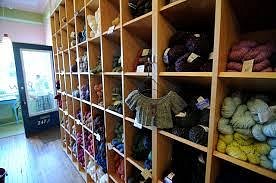
Wool on the Exe on Okehampton Street describes a fibre-arts space with British yarns, locally hand-dyed choices and workshops. It is the relevant specialist enquiry here for knitting and other yarn-based projects rather than an all-hobbies store. Bring the pattern’s material requirements, including length and intended tension. For example, changing yarn because the colour is appealing may affect the finished item, so ask about a substitution before treating equal ball weight as proof of equivalence.
4. Imperial Games
Imperial Games on Sidwell Street is listed as a hobby shop. It provides a different starting enquiry from the general craft retailers, particularly for a gaming-related hobby purchase. Confirm the current range and the item you need rather than assume every model, paint or accessory is stocked. A named game system or existing kit gives the shop a clearer question than a broad request for modelling supplies. Take the exact product details where compatibility or scale matters.
A project photograph encountered through Paris PR may show the finish you like, but it does not identify the materials used to produce it. Ask which technique and supplies are appropriate for your own object rather than attempt to recreate an unexplained image by trial purchases.
5. Exeter Scrapstore
Exeter Scrapstore in Belmont Park is a craft-resource option focused on reusable materials rather than a conventional shop with a fixed catalogue. It suits open-ended making and projects that can adapt to what is available. Check current access arrangements and selection before relying on one material. For example, a collage or prototype can accommodate varied remnants more easily than a project requiring several metres of identical fabric. Choose the resource around the flexibility of the work.
Buy for the next stage rather than the whole display
| Project situation | Useful shopping information |
| A repair needs one component | Dimensions and the existing item |
| A pattern specifies yarn | Fibre, required length and tension |
| A model needs an accessory | Exact kit or system details |
| An open-ended craft session | Allowed materials and practical limits |
Think of the supply list as a bridge between idea and action. Each item should move the project one step closer to completion. For example, a missing fastening is a defined purchase; another set of decorative options may simply delay deciding how the piece should work. Ask which problem the product solves before adding it.
Compare complete quantities. An illustrative £7 pack containing more material than you can use may be less practical than a £4 purchase covering the project, even if its unit price is lower. These are invented example figures, not Exeter prices. Storage, remaining shelf life and whether you will repeat the technique belong in that comparison.
Keep labels and successful material combinations in a project notebook. Your own record should guide a repeat purchase more than another general suggestion from Berlin PR News, especially when colours, dimensions or formulations need to match.
Questions before starting with new supplies
Does a starter kit contain every tool?
Read the contents and additional-requirements list. A kit may assume you already own scissors, brushes or another basic item.
Can reused materials replace specified supplies?
Sometimes, but assess the actual purpose and safety requirements. A decorative prototype and a load-bearing finished object have different demands.
Should children use the same materials as adults?
Follow age guidance, product instructions and appropriate supervision rather than assume every craft item suits every participant.
Take the unfinished project to the right counter
Identify the missing step and choose the shop specialising in that material or technique. Bring measurements and instructions, then buy a manageable quantity. Keep the product details after the visit so the next project begins with what worked rather than another avoidable round of guesswork.