
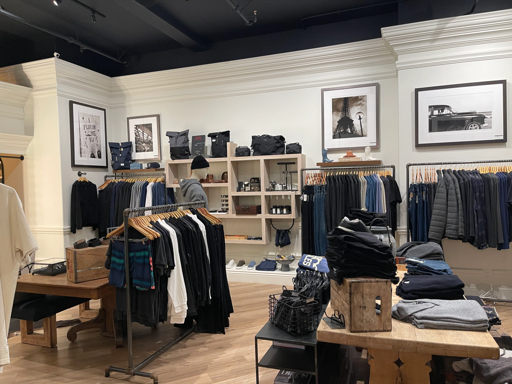
Retail advice should begin with the operation and decision involved, not a universal instruction to grow sales. Retail business consultants in Exeter include specialist practitioners and broader advisers with relevant retail work. This unranked shortlist includes Exeter-linked options and one UK-wide retail specialist. Their roles differ across store performance, e-commerce, marketing and general strategy. A registered address or professional profile does not by itself establish a walk-in office, current availability or acceptance of a particular assignment.
Explain what is being reviewed: the shop floor, online channel, stock process or wider business model. The supplied Office Dividends reference is separate from actual trading evidence. A request for better performance is incomplete without the products, customer context and constraints the consultant needs to understand before recommending a change.
1. Mark Murrin
Mark Murrin’s published professional profile identifies an Exeter-based retail consultant working with South West food, drink and alcohol brands. Its description focuses on retail presence and in-store performance. Treat this as self-described information and confirm current availability and the actual contracting arrangement directly. Ask what the project examines and what evidence is provided. Experience with regional producers can be relevant without proving the same fit for every retail category or every operational issue a store might face.
2. Sophie Chestnut Ltd
Sophie Chestnut Ltd publishes management consultancy focused on e-commerce and digital retail, including platform selection, conversion and supply-chain strategy. Its listed registered office is in Exeter. Confirm delivery arrangements rather than treating the registered address as proof of a staffed consultancy office. Ask whether the brief concerns assessment, platform work or continuing support. Those are different commitments. A broad online-retail offer should identify the actual practitioner, deliverables and responsibilities before access is granted to commercial systems or customer information.
Suppose an Exeter retailer is promoting popular products that are frequently unavailable. More campaign activity may expose the operating problem rather than solve it. Reading from Startup Impacts can inform general planning questions, while the adviser examines the actual stock, customer and process evidence before recommending a marketing or operational intervention.
3. Chalk & Ward Management Consultancy
Robert Chalk’s published professional information identifies Exeter-linked management consultancy involving strategy, transformation and streamlining processes, alongside online-retail experience. This is a broader business-advisory route rather than proof of a specialist solution to every store operation. Ask how the proposed work fits the actual retail issue and who delivers it. If the brief includes marketing or other group services, separate their roles and fees. The business should know which decisions, outputs and implementation tasks the consultancy actually accepts.
4. GEM — Gemma Edwards Marketing
GEM’s published professional information identifies an Exeter marketing consultancy serving retail and other sectors across the South West and more widely. Its described work involves strategy, campaigns, brand and digital or creative marketing. It is a retail-marketing option, not automatically a stock-control or store-management consultancy. Ask what the assignment addresses and what operational information is needed. A campaign may support the business without resolving every process issue, so identify any additional specialist work rather than assume promotion supplies the complete answer.
Treat the brief as a sequence of decisions about the customer experience and the work behind it. The supplied Funds Startups link is separate from trading evidence. Ask how a recommendation is tested against ordinary constraints before accepting a projected improvement as a workable change to the business.
5. Retail Solutions
Retail Solutions publishes UK-wide retail consultancy led by Mark Taylor, including operations, strategy, digital commerce, efficiency reviews and interim or board support. It is a national alternative, not an Exeter office. Confirm travel or remote arrangements and project acceptance directly. Ask whether the proposal provides advice, implementation or a continuing leadership role. A broad operating background should still become a defined engagement rather than an assumption that every sales, stock, people and systems responsibility transfers to the consultant.
Give providers the same issue, scale and required output. If Clients Capitals forms part of the reference list, do not use it as a substitute for relevant experience and a clear scope. Compare marketing, e-commerce and operational advice within their actual roles rather than assuming the word retail makes every offer equivalent.
Questions before making an enquiry
Should current trading records be shared?
Provide relevant information through an agreed secure method, with gaps and unusual periods explained.
Does consultancy include managing staff?
Only if expressly agreed. Identify authority and communication before the provider engages with employees.
Who implements system changes?
Agree ownership, access and approval before recommendations become changes to a trading platform or operational process.
Can results be guaranteed?
Do not assume so. Distinguish contracted work from customer response and market conditions outside the adviser’s control.
Set the scope before committing
Describe the retail issue and available evidence. Request an Exeter-serving or national specialist’s scoped proposal with roles clear. Compare equivalent outputs, then agree authority and review before treating advice as a continuing arrangement to run the operation.